
00
40
Can You Be an Architect and an Interior Designer? Yes.
Pablo Garza
Last updated: June 10, 2026
Yes — one firm can hold both. In Mexico, architecture and interior design are 2 separately licensed professions under the SEP; a single practitioner can hold credentials in both. FORMM delivers both disciplines as a single integrated practice in Mérida. Here is what that means for your project.
Can one person legally hold both architecture and interior design credentials?
Yes. In Mexico, the Secretaría de Educación Pública (SEP) issues separate cedulas profesionales — federal professional licenses — for Arquitectura and Diseño de Interiores. A practitioner who completes both degree programs can hold both licenses simultaneously. The two credentials are independent: holding one does not grant the other, and each requires its own university program and SEP registration.
How Mexico's SEP licenses each profession separately
Mexico's SEP, through the Dirección General de Profesiones, issues a cedula profesional for every licensed profession practiced in the country. Architecture and interior design are registered as distinct disciplines on the SEP portal, each with its own credential category. A professional who trains in both fields and obtains both cedulas can legally practice both — architecture for structural design, permitting, and site oversight; interior design for spatial planning, finish specification, and furniture selection.
The cedula determines what work you can legally sign and where you are legally liable. An architect can sign a structural permit. An interior designer cannot — regardless of experience or years in practice.
What "integrated firm" means vs. a firm that subcontracts one discipline
An integrated firm holds both licenses in-house, meaning the same team that designs the structure also specifies the interiors, under a single contract and a unified design intent. This is different from an architecture firm that subcontracts interior design to a separate studio. In a subcontracted model, two teams share one project but operate from different contracts, different deliverable timelines, and different commercial incentives.
When FORMM takes on a residential project in Mérida, both the architectural permit drawings and the interior specification documents are produced by the same team. There is no handoff between disciplines — structural decisions and interior decisions are made in parallel from day one.
Mexico's SEP recognizes architecture and interior design as distinct licensed professions, each requiring a separate cedula profesional — a regulatory distinction that determines permit eligibility, scope of liability, and DRO authority on permitted construction projects. (cedulaprofesional.sep.gob.mx)
Can you be an architect and an interior designer?
Yes. An architect can hold credentials in both disciplines. In Mexico, each requires a separate cedula profesional from the SEP; a single practitioner who completed both programs can hold both. FORMM practices architecture and interior design as one integrated service under one contract.
Do architects do interior design?
Yes — many licensed architects also practice interior design, particularly in residential projects where spatial flow, material selection, and structural decisions are interdependent. In Mexico, architects who trained in both disciplines can hold separate cedulas profesionales for each. FORMM offers both services under one contract in Mérida.
What changes when the same firm handles architecture and interior design?
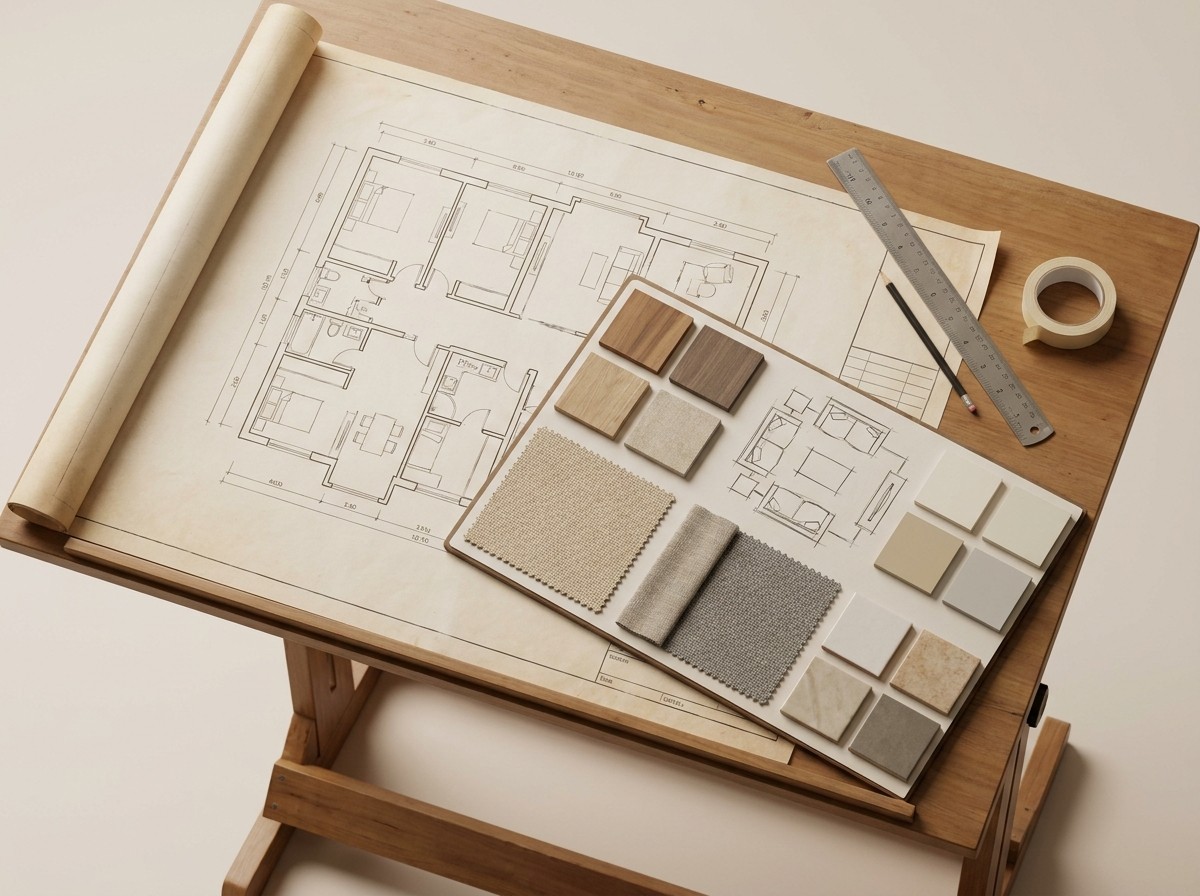
A single integrated firm eliminates the coordination gap that forms when two disciplines hand off mid-project. Structural decisions that affect interior space — slab thickness, ceiling height, column placement — are resolved collaboratively before permit drawings are filed, not discovered after. The result is fewer change orders and a more cohesive finished project.
For more on how this translates into a predictable workflow, see FORMM's architectural design process.
Design decisions made in parallel, not in sequence
In a two-firm model, the architect delivers structural drawings and then hands off to an interior designer. The interior designer frequently encounters constraints — a structural wall where a client expected an opening, a beam that cuts into a desired ceiling height — that require expensive revisions to the architectural documents. In an integrated model, those constraints are identified and resolved in the first design phase, before any become change orders.
This parallel workflow is particularly relevant in Mérida's residential market, where projects often require concurrent permit approval and interior specification because of accelerated construction timelines.
How integrated delivery affects project budget and timeline
A single integrated contract establishes one scope of work with one set of deadlines. The client receives one invoice, one project schedule, and one point of contact for decisions that span both disciplines. This reduces the administrative overhead of coordinating two firms — separate contracts, separate billing cycles, separate revision processes — and eliminates the scope-gap risk that arises when the line between architecture and interior design is drawn differently by each firm.
FORMM's integrated delivery model eliminates the revision loops that occur when separate architecture and interior design firms encounter each other's decisions mid-project — a common friction point in residential construction in Mérida. FORMM's Mérida practice delivers architecture and interior design as a single integrated service; contact FORMM for representative project references.
What is the practical difference between an architect and an interior designer in Mexico?
An architect is legally responsible for structural design, code compliance, and — in Mérida — must serve as Director Responsable de Obra (DRO) on residential permit applications. An interior designer focuses on spatial planning, material and finish selection, and furniture specification. The scopes overlap substantially in residential work; the permit authority does not.
Scope of practice and what each license covers
A licensed architect (Arquitecto, cedula profesional: Arquitectura) can design structural systems, prepare permit drawings, supervise construction on permitted sites, and sign as DRO. In residential work, the architect defines building form, structural elements, and the technical compliance package submitted to the municipal authority.
A licensed interior designer (Diseñador de Interiores, cedula profesional: Diseño de Interiores) can design interior space layouts, specify materials and finishes, select and specify furniture, and produce interior construction documents. Interior designers are not eligible to sign structural permit applications or serve as DRO.
For a detailed comparison as practiced in Mérida, see FORMM's article on architecture vs. interior design in Mérida.
When Mérida law requires a registered architect (DRO)
Residential construction in Yucatán that involves new construction, structural modification, area additions, or changes in land use requires a registered architect serving as Director Responsable de Obra (DRO). The DRO is legally responsible for ensuring construction complies with applicable building regulations. Interior designers are not eligible to serve in this role under Yucatán residential construction regulations.
This means any project beyond cosmetic finishes — adding a room, modifying a structural wall, building a pool, extending a terrace — requires an architect on record. If a homeowner hires an interior design firm that does not hold architectural credentials, a separate architect must be contracted for the permit application.
Yucatán residential construction regulations require a licensed architect as Director Responsable de Obra on permit applications for new construction and major structural alterations — interior designers are not eligible to sign as DRO, regardless of experience.
Is an interior designer the same as an architect?
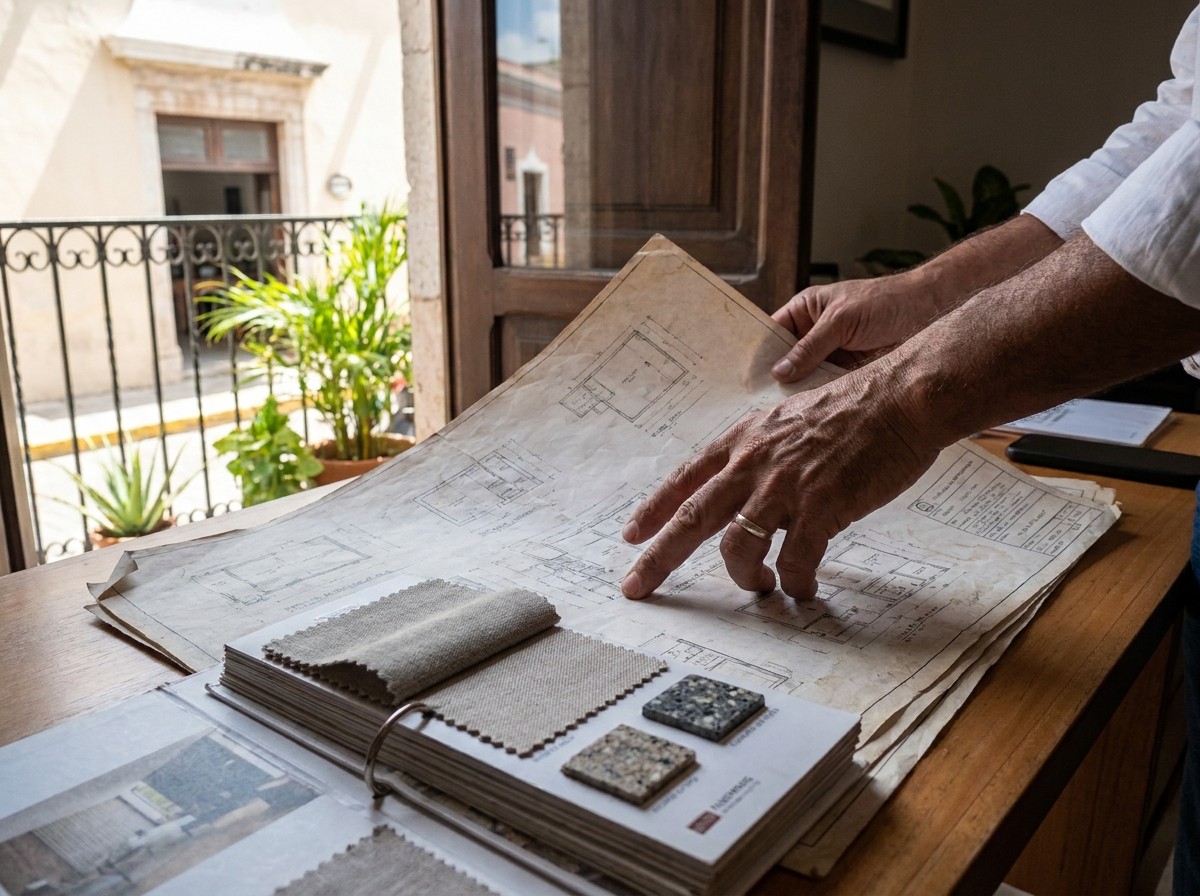
No — but the scopes overlap. An architect is legally responsible for structural integrity, site compliance, and — in Mérida — must sign as Director Responsable de Obra on residential permits. An interior designer focuses on spatial planning, finishes, and furniture. The distinction matters most when your project requires permits.
What is the difference between an architect and an interior designer?
An architect is responsible for structural systems, code compliance, and — in Mexico — the DRO permit signature. An interior designer specifies finishes and spatial layout. On projects where both scopes interact, a single integrated firm avoids the revision loops that occur when two teams hand off mid-design.
The table below compares the three delivery models side by side:
Dimension | Licensed Architect | Licensed Interior Designer | Integrated Firm (Both) |
|---|---|---|---|
DRO permit signature (Mérida / IMIP) | Eligible — required for structural/major work | Not eligible | Covered by in-house licensed architect |
Structural design authority | Full scope | Advisory only | Full scope |
Interior space planning | Yes | Full scope | Full scope |
Material and finish specification | Yes | Full scope | Full scope |
Furniture and fixture selection | Limited scope | Full scope | Full scope |
Cedula profesional required (Mexico) | Yes — Architecture | Yes — Interior Design | Both held by firm's licensed staff |
Mid-project handoff risk | N/A (solo) | N/A (solo) | Eliminated — same team holds full scope |
Fee structure | Separate contract | Separate contract | Single integrated contract |
When should you hire a firm that practices both architecture and interior design?
Hire an integrated firm when your project requires a construction permit, involves structural changes, or needs both disciplines to resolve design decisions simultaneously. In Mérida, any project that modifies structure, adds floor area, or changes building use requires an architect as DRO — and hiring the same firm for interiors eliminates scope gaps from the start.
Project types where integration delivers the clearest benefit
The following project types benefit most from a single integrated firm:
New residential construction: Structure and interiors are designed as a unit from the first sketch. Material choices, ceiling heights, and structural openings are resolved before permit drawings are finalized.
Major renovations requiring permits: Adding a room, modifying a load-bearing wall, converting a garage — all require DRO sign-off. If the renovation also includes interior redesign, a single firm prevents the hand-off gaps that produce change orders.
Vacation and investment properties: Projects with tight timelines and remote owners benefit from a single point of contact — one contract, one schedule, one communication thread.
Historic properties in Mérida's Centro Histórico: Permit requirements are layered (INAH, IMIP, state heritage regulations). Having structural and interior permit documentation produced by the same firm reduces the risk of contradictions between submittals.
Questions to ask when comparing firms in Mérida
Before hiring, confirm:
Does the firm hold both an architecture cedula profesional and an interior design cedula profesional? Ask to see both.
Has the firm served as DRO on permitted projects in Mérida? Ask for a reference from a permit application filed with the municipal authority.
Does the firm use a single contract for both scopes, or two separate agreements? A single integrated contract means one scope definition, one revision process, and one fee structure.
Who on the project team holds the cedulas? Confirm the specific licensed individuals, not just the firm name.
Use the FORMM project cost estimator to get a project-specific fee estimate for integrated architecture and interior design services in Mérida.
For background on FORMM's architecture and interior design practice in Mérida, including the team's credentials and current project availability, see the About page.
Should I hire an architect or interior designer for my Mérida home?
It depends on whether your project requires a construction permit. In Mérida, any residential work that modifies structure, adds area, or changes building use requires an architect as Director Responsable de Obra per IMIP regulations. Renovations limited to finishes may only need an interior designer — but one firm covering both prevents scope gaps.
How much does it cost to hire a firm that does both architecture and interior design in Mérida?
Professional fees in Mexico follow CAY (Colegio de Arquitectos de Yucatán) reference schedules. Integrated firms charge one combined fee for both services — typically more predictable than two separate contracts because scope boundaries are fixed from day one. FORMM provides project-specific estimates at formm.mx/estimador.