00
35
The Architectural Design Process: 5 Phases Explained
Pablo Garza
The architectural design process runs five sequential phases: Site Analysis and Project Brief, Schematic Design, Design Development, Construction Documents and Permits, and Construction Administration. In Mérida, for a residential project under 300 m², the full sequence from signed brief to approved building permit averages 14–18 weeks. Most of that window is deterministic — not creative, not variable — which means knowing it in advance is the single most useful thing you can do before you commission an architect.
By Pablo Garza · Founder & Tech Lead at FORMM Creative Group · Published May 4, 2026 · Last updated May 4, 2026
What the Process Actually Delivers — and Where Projects Break Down {#what-the-process-delivers}
The five phases exist to convert a client's objectives into a buildable reality at a defensible cost. They are not bureaucratic steps; each one produces a specific deliverable that the next phase depends on. When a project breaks down — blown budgets, scope conflicts, construction delays — the failure usually traces to a phase that was abbreviated or skipped entirely.
The phase most clients skip — and what it costs them later
Phase 1 (Site Analysis and Project Brief) is the phase most clients want to rush. The instinct is understandable: you already know what you want, you have hired an architect, why spend two to four weeks on documentation before a single line gets drawn?
The answer is change-order cost. FORMM tracks scope conflicts on referred projects — cases where clients brought the firm in after starting with another team. The pattern is consistent: 15–25% of typical change-order costs on those projects trace directly to scope gaps that were never formalized in the brief phase. A change order during construction costs three to five times what the same decision costs during design development. Brief-phase investment pays back in reduced construction-phase friction.
Design-only firms vs. integrated delivery: where control shifts
An architect who hands off to a separate general contractor at the end of Phase 4 exits the project at exactly the moment when the design is most at risk of being value-engineered into something the client did not agree to. The contractor's incentive is margin; the architect's drawings become a starting point for negotiation rather than a binding specification.
FORMM's integrated model — architectural design plus construction execution under one entity — maintains cost and schedule accountability from Phase 1 through Phase 5. The design team knows they will be building what they specify; that constraint produces more constructible drawings and fewer field-decision compromises.
The Five Phases, in Order {#five-phases}
Phase 1 — Site Analysis and Project Brief
Duration: 2–4 weeks.
Deliverable: A signed project brief document with site constraints, program requirements, area targets, budget parameters, and approval milestones.
This phase starts with site visits, topographic survey where applicable, and a municipality-specific code review. In Mérida's northern residential zones, the relevant instrument is the Plan de Ordenamiento Territorial de la Zona Metropolitana de Mérida. The brief captures what the client needs (area by use), what the site constrains (setbacks, maximum height, soil conditions), and what the budget range realistically supports.
The signed brief is the contract for Phase 2. Architects who skip the brief and move directly to sketching are transferring scope-definition risk onto the client.
Phase 2 — Schematic Design
Duration: 3–5 weeks.
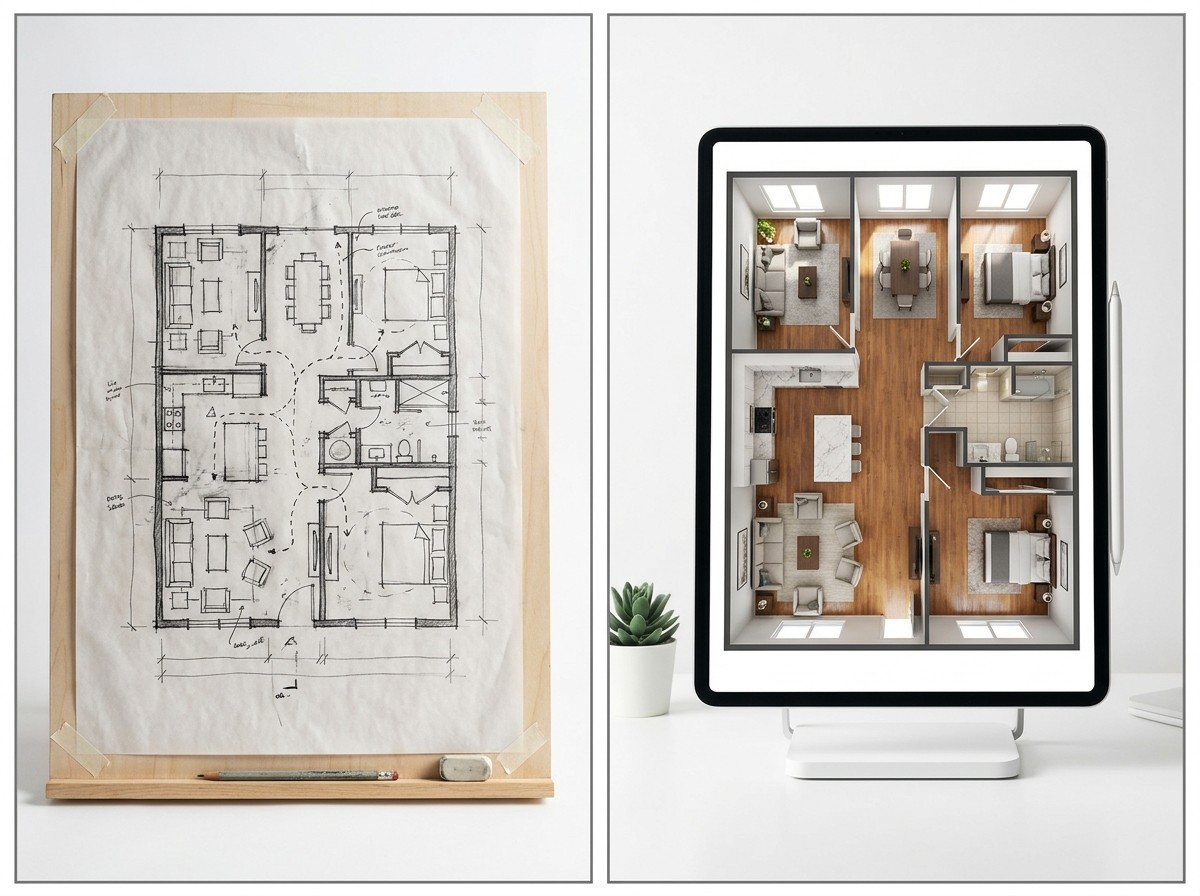
Deliverable: Concept drawings — floor plan options, massing studies, section sketches — at a scale that communicates design intent without committing to dimensions.
This is where design ideas compete. Typically two to three scheme options respond to the brief's program and budget envelope. The goal is a client-approved direction before detailed development begins. Changes at this stage cost hours; the same change in Phase 4 costs days.
A schematic approval is not a design approval. Clients often confuse the two. Signing off on a schematic means "pursue this direction" — it does not commit anyone to floor plan dimensions, structural system, or material palette.
Phase 3 — Design Development
Duration: 4–6 weeks.
Deliverable: Coordinated architectural, structural, and MEP (mechanical, electrical, plumbing) drawings at a level of detail sufficient for pricing.
Phase 3 is where the design hardens from intent to specification. Walls get dimensions. Structure gets designed. Finishes get specified with supplier references. An updated construction cost estimate is produced by the end of this phase — this is the right moment to run your scope through FORMM's construction cost estimator to calibrate your total project budget against current market rates before finalizing the program.
If the Phase 3 estimate exceeds the brief's budget, adjust scope here. A mid-Phase-3 scope reduction costs one to two weeks. The same change in Phase 4 costs four to six weeks.
Phase 4 — Construction Documents and Permits
Duration: 4–6 weeks (design) + 6–8 weeks (permit review, outside the architect's control).
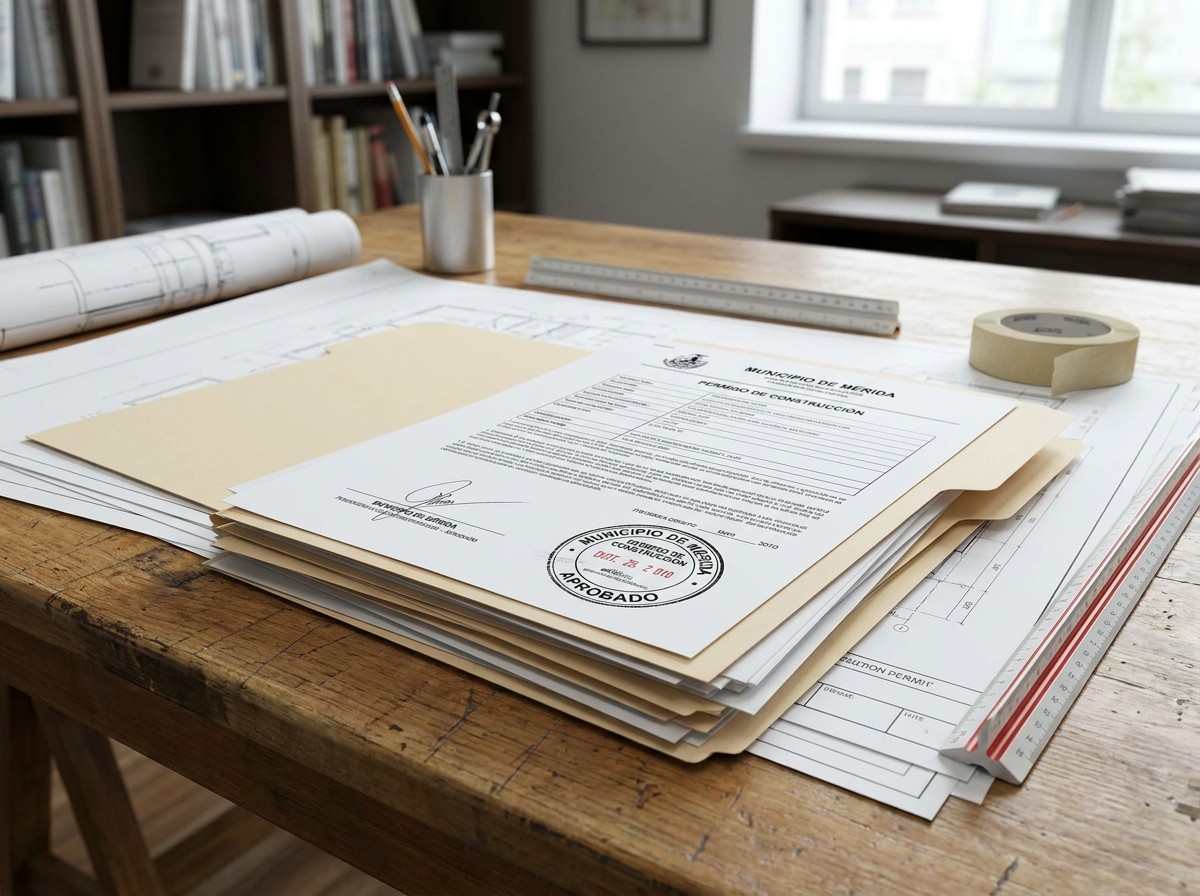
Deliverable: A complete permit set — architectural drawings, structural calculations, MEP plans, technical specifications — submitted to and approved by the relevant municipal authority.
In Mérida's northern residential zones, permit processing at the Dirección de Desarrollo Urbano takes 6–8 weeks as of Q1 2026. That timeline is not something any architect can compress; the queue is what it is. Clients who push architects to start construction before permit approval are accepting legal and financial exposure that no amount of urgency justifies.
The quality of Phase 4 documents determines how quickly the permit moves and how few correction rounds the review generates. Incomplete sets — missing structural calculations, unsigned sheets, omitted site plans — are the primary cause of permit delays.
Phase 5 — Construction Administration
Duration: Concurrent with construction, typically 8–16 weeks for a residential project under 300 m².
Deliverable: Periodic site reports, RFI (request for information) responses, substitution approvals, and a final punch list.
The architect's role in Phase 5 is design intent protection, not construction management. When a contractor submits a substitution request — a different tile, a structural beam routed differently from the drawings — the architect evaluates whether the change preserves design intent.
On FORMM projects, the same team that designed the building administers the construction. See our completed residential projects for outcomes. On third-party projects, Phase 5 is often where clients discover their design-only architect has limited leverage over a contractor they did not select.
Timelines and Cost Benchmarks (FORMM 2025 Project Data) {#timelines-and-costs}
Metric | FORMM residential (under 300 m²) | Note |
|---|---|---|
Brief to building permit | 14–18 weeks | Mérida northern residential zones; N ≥ 20 projects, 2025 completions |
Municipal permit review | 6–8 weeks | Dirección de Desarrollo Urbano, Q1 2026 queue |
Design fee as % of construction cost | 8–12% | Per CAY 2024 professional fee schedule (Colegio de Arquitectos de Yucatán) |
Change-order savings (integrated vs. design-only) | 15–25% lower | Tracked on referred mid-build projects, 2023–2025 |
The 6–8 week permit window is the most common schedule surprise for clients who have not been through a Mérida residential project before. Plan for it from day one. Note on timing: the 14–18 week total reflects FORMM's integrated model — because the same team handles design and construction, handoff delays between phases are eliminated, and detailed design work in Phases 3 and 4 runs faster than the upper-bound estimates that apply to design-only firms coordinating with separate contractors.
Three Questions to Ask Before You Sign a Design Contract {#three-questions}
1. What is your role during construction?
"Design-only, then handoff" and "integrated design-build" are fundamentally different engagements. Knowing which one you are contracting shapes your expectations for Phase 5, your contingency budget, and who to call when something built differs from something drawn.
2. Whose budget assumptions are in the estimate?
A design firm that has not built recently is estimating from market comps, not current supplier quotes. Ask when their last cost estimate was reconciled against an actual bill of materials. FORMM's estimates derive from active procurement data — materials the firm is currently sourcing for ongoing projects.
3. How do you handle permit corrections?
Every Mérida permit review generates at least one correction request. How a firm tracks corrections, who owns the response, and what the turnaround target is — those answers tell you whether 6–8 weeks is their floor or their average.
A well-run architectural design process is not creative chaos. It is a structured risk-reduction sequence where each phase narrows uncertainty and each approval checkpoint gives you a defined exit with documented assumptions. The 14–18 week timeline for a Mérida residential project is the outcome of running all five phases without shortcuts.